
Fit and sizing are the single biggest reason clothing comes back. Across recent industry studies they account for roughly 50–53% of apparel returns, and a 2025 survey of 6,000 shoppers reported by Channelwill found 61% had returned an item because it did not fit. With apparel return rates running 20–40% of orders and each fashion return costing a retailer an estimated $10–$30 to process, the size chart is one of the highest-leverage things on a product page.
The problem is rarely that a store has no size chart. It is that the chart does not answer the question a shopper has at the exact moment they pick a size. Here is how to turn a table of numbers into guidance shoppers can act on.
Why a Size Label Alone Is Not Enough
S, M, L and numbered sizes do not mean the same thing between brands. Ergonode notes that the same labelled size can vary by 5–10 cm from one label to another. When a shopper orders based on what fit somewhere else, they are effectively guessing — and guessing is what bracketing is built on. Narvar has estimated that bracketing (ordering several sizes to keep one) drives around 40% of fashion returns; roughly half of online shoppers now do it.
Measurements give the label a reference point. "I'm probably a medium" becomes "these measurements match the medium" — a decision instead of a gamble.
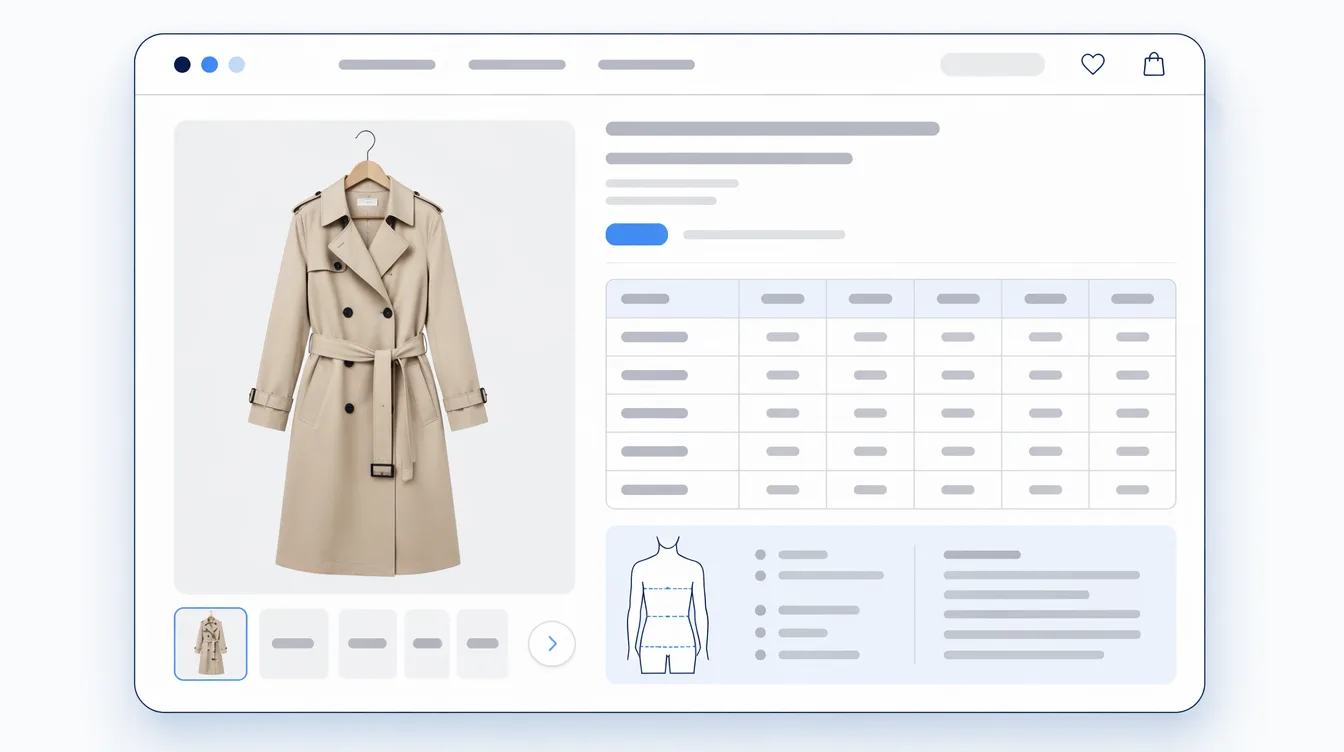
Show Body and Garment Measurements Together
Body measurements describe the person a size is designed to fit. For tops that usually means bust, waist and hip; for trousers, waist, hip and inseam. They help a shopper match their own body to a label — most useful for first-time buyers.
Garment measurements describe the item itself, measured flat: chest width, body length, shoulder width and sleeve for tops; waist width, rise, thigh and inseam for trousers. They reveal the silhouette and how much room there is — essential for oversized, tailored or denim styles where drape matters.
Shopify's own guide to sizing charts recommends both, because they answer two different questions. Showing them together means a shopper never has to choose which one they get.
Keep Measuring Instructions Short and Visual
Accurate numbers only compare if everyone measures in the same place. A few clear cues beat a long technical note:
- Bust: around the fullest point, tape level
- Waist: at the natural narrow point above the navel
- Hip: around the fullest part of the seat
- Inseam: from the crotch seam to the ankle along the inside leg

Tell shoppers what to do between sizes, too. A single line such as "Between sizes? Size up for a relaxed fit, or down for a closer one" turns a borderline case into a confident choice.
Put International Size Conversions on the Same Row
If you sell across borders, align US, UK, EU and Japanese sizes on one row next to the measurements. A common example lines up US 8, UK 12, EU 40 and JP 11 — but every brand fits differently, so the measurements are the anchor. Two shoppers using different national systems can still both trust the same 91–94 cm bust range.
Show Centimetres and Inches
US shoppers tend to think in inches; most other markets use centimetres. Showing both removes a conversion step and keeps attention on the product instead of a calculator. It is a small courtesy that measurably lowers hesitation for international buyers.
Place the Guide Where the Question Appears
The best place for a size guide is right next to the size selector, where shoppers pause to decide. Baymard Institute's product-page research finds most stores still underperform here — only about 18% of top ecommerce sites have "good" or "acceptable" product-page UX. A clear "Size Guide" link that opens the chart in place keeps the page tidy while putting the answer one tap away. A detailed table buried at the bottom of the page cannot help the shopper who never scrolls to it.
Add a Product-Specific Fit Note
A shared chart cannot explain every cut and fabric. A short, product-level note closes the gap:
- "Slim through the body. Consider sizing up if you prefer more room."
- "Elasticated waist. Medium is designed for a 68–76 cm waist."
- "The fabric stretches. Measurements are taken with the garment unstretched."
These sentences answer the exact question "true to size" leaves open, for the item the shopper is actually looking at.
Treat Return Reasons as Free Feedback
"Too small" and "too large" are not just costs — they are data. If one size keeps coming back as too small, review its garment measurements and fit note first. Measmerize reports up to 40% fewer size-related returns for stores using guidance based on accurate garment data. A size chart is not a document you publish once; it should get sharper every season as you learn how your products and shoppers fit together.
Mitasu for Apparel lets you add product-specific size charts, garment measurements and fit notes to Shopify product pages — template-managed, with per-product overrides, and no theme-file editing.
Sources: PRIME AI — Clothing Return Rates by Category and Country; Channelwill — Ecommerce Return Rates 2025; Ergonode — 7 Bad Practices for Size Charts; Landmark Global — Wardrobing & Bracketing; Shopify — How to Create a Sizing Guide; Baymard Institute — Product Page UX Research; Measmerize — Solving Sizing; Selvane — The Hidden Cost of Fashion Returns.